

Why your dog listens at home but falls apart on walks
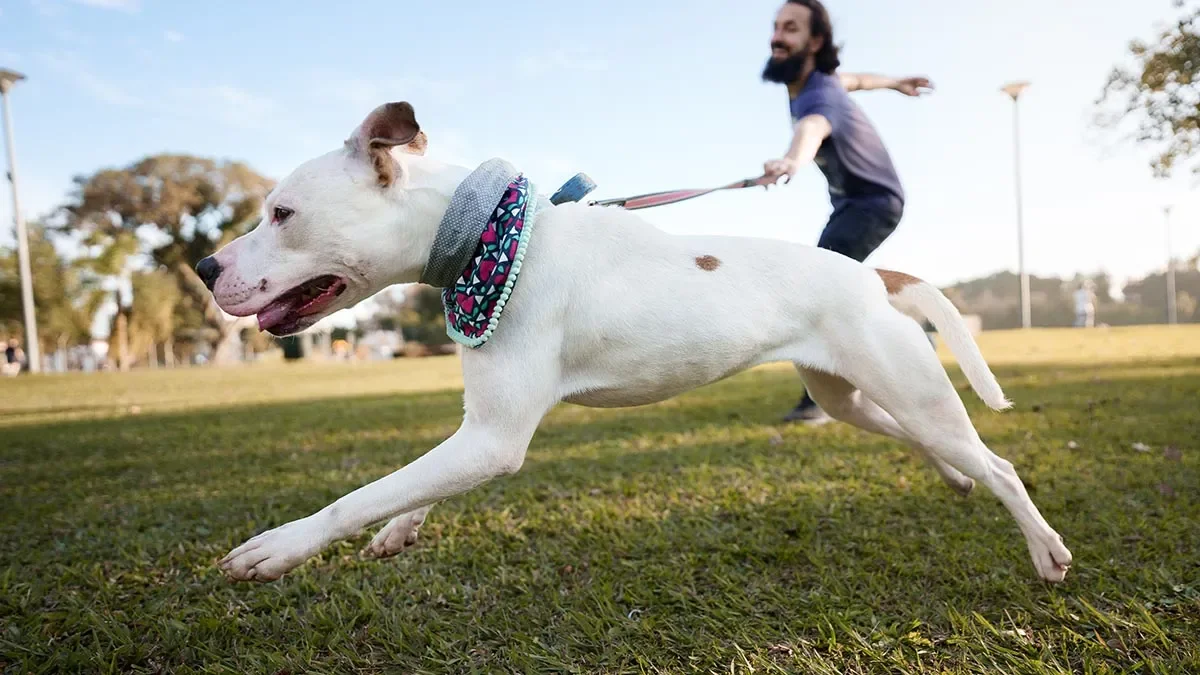
You've done the work. You practiced sit, down, heel, come. Your dog nails it every time in the kitchen. You feel good. You snap on the leash, walk out the front door, and the second another dog appears at the end of the block your dog is gone. Lunging, barking, spinning, completely unreachable. It's like the last three weeks of training never happened.
You're not doing it wrong. Your dog isn't broken. But there's something fundamental happening here that most people never get explained to them properly.
Your dog isn't disobeying you. Your dog literally cannot hear you.
Not physically, emotionally. When a dog hits a certain level of arousal, their brain shifts into a state where the thinking, reasoning, responsive part essentially goes offline. The part that learned "heel" and "yes" and "good boy" is still in there. But it's been overridden by a system that's older, faster, and a whole lot louder.
This is why the living room and the sidewalk feel like two completely different dogs. In the living room, arousal is low. The environment is predictable. Your dog has bandwidth to process information, respond to cues, and make good choices. Outside, with a trigger present, arousal spikes and that bandwidth disappears.
The problem with most training is where it stops
Most basic obedience training and most online tutorials, group classes, and quick-fix programs teaches commands in controlled, low-distraction environments. That's the right place to start. But it's only the beginning, and a lot of programs stop there and call it done.
What's missing is the bridge. The systematic process of taking behavior that's solid in a calm environment and making it reliable when arousal is high. That bridge doesn't happen on its own. It doesn't happen from more repetitions in the kitchen. It has to be deliberately built, one step at a time, in the real world.
What that bridge actually looks like
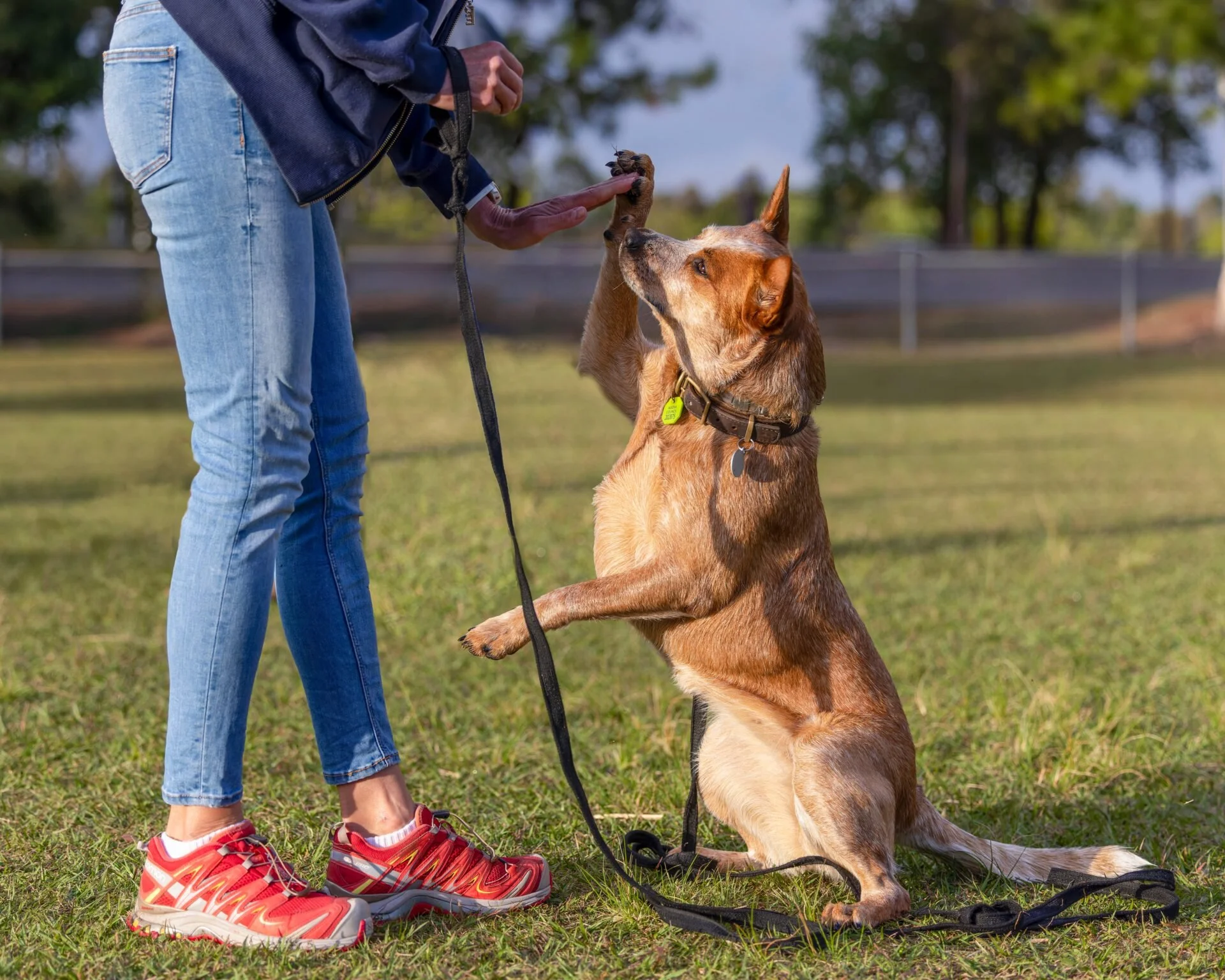
The first principle is one we come back to constantly: if your dog doesn't respond to you in a calm environment, they will not respond to you when excited and aroused. So before we ever work near a trigger, we need to know that the foundation is genuinely solid not just in the kitchen, but in a parking lot, on an unfamiliar street, in a new building. Obedience has to be proofed across environments before it's ready to compete with a trigger.
The second piece is threshold management. Every dog has a threshold the distance, intensity, or duration of exposure to a trigger at which they tip from manageable into reactive. Working below that threshold is not avoidance. It's the only place where actual learning can happen. A dog that's already over threshold isn't learning anything. They're just surviving the moment.
The third piece is building a new emotional response not just suppressing the old one. A dog that gets corrected every time they react at another dog may stop lunging. But if the underlying emotional state hasn't changed, that arousal is still there, still building, and eventually it finds a way out. Real behavior change means the dog genuinely feels differently about the trigger less threatened, less overwhelmed, more able to look to you instead of exploding.

What this means for your dog
If your dog is falling apart on walks, the answer isn't more repetitions of sit in the kitchen. It's not a stronger correction. It's not avoiding every situation that causes a reaction because avoidance never teaches the dog anything except that the world is unpredictable and you can't help them navigate it.
The answer is a structured plan that starts with a real assessment of where your dog actually is, builds a foundation that holds under pressure, and systematically closes the gap between how they behave at home and how they behave when the world gets loud.
That gap is closeable. We close it every day. But it takes the right framework not just more of what hasn't been working.
If your dog is reactive on leash and you're not sure where to start, reach out. We'll tell you honestly what we think your dog needs and whether we're the right fit to help.